
What the Cañon City climate figures show
The monthly figures describe the climate at NOAA's CANON CITY, CO US station, USC00051294. They use the normal period 1991 to 2020, in the NOAA/NCEI Summary of Monthly Normals issued on 23 October 2026. The temperature columns are averages of daily highs and lows; rainfall is the mean monthly precipitation total. These figures describe a long-term pattern rather than today's weather.
The station is in Cañon City, so this is not a separate measurement series for the bridge. A monthly average also does not give the weather for a particular departure or walking route. Use the table to choose clothing for the season, then use a current forecast to arrange the actual day. Activity-based advice belongs on the best time to visit page.
Read the high and low together. A mild daytime value can sit beside a below-freezing average night, while a low monthly precipitation figure still leaves room for wet weather. For river plans, a warm afternoon is a description of the air, not evidence that the Arkansas has warm water.
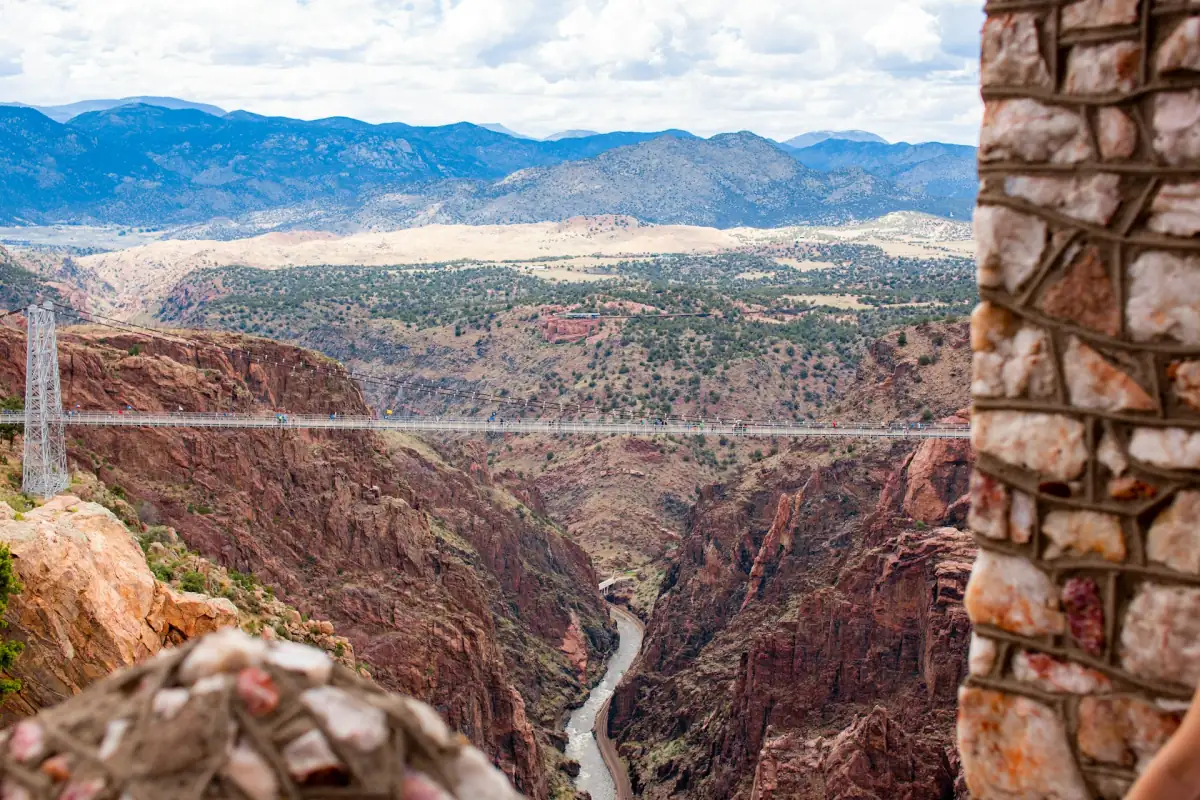
Monthly temperatures and precipitation
All temperatures are in degrees Celsius and precipitation is in millimetres. The values below reproduce the station normals, converted from Fahrenheit and inches and rounded to one decimal place. The table gives typical monthly conditions without promising a dry day, frost-free night or particular water level.
| Month | Average daily high °C | Average daily low °C | Precipitation mm |
|---|---|---|---|
| January | 9.7 | −7.6 | 14.0 |
| February | 10.2 | −6.8 | 14.5 |
| March | 14.7 | −3.3 | 26.4 |
| April | 17.9 | 0.7 | 44.7 |
| May | 22.9 | 6.1 | 39.6 |
| June | 29.2 | 11.2 | 21.6 |
| July | 31.8 | 14.8 | 57.1 |
| August | 30.4 | 14.0 | 52.3 |
| September | 26.7 | 9.1 | 30.5 |
| October | 20.3 | 2.3 | 22.1 |
| November | 14.0 | −3.2 | 14.0 |
| December | 9.4 | −7.4 | 11.7 |
Summer's warmer daytime readings appear alongside higher precipitation in July and August than in June. That combination is useful when packing: sunshine clothing and a weather layer serve different parts of the same trip. The monthly totals do not reveal when a shower will pass or how long it will last.
A seasonal river outing
For a river day, check conditions, cold water and your suitability with the operator before booking.
Hand-picked tours, booked through GetYourGuide. Prices are indicative starting prices in US dollars (as of October 2026). Tap a tour for live availability and the current price in your currency.
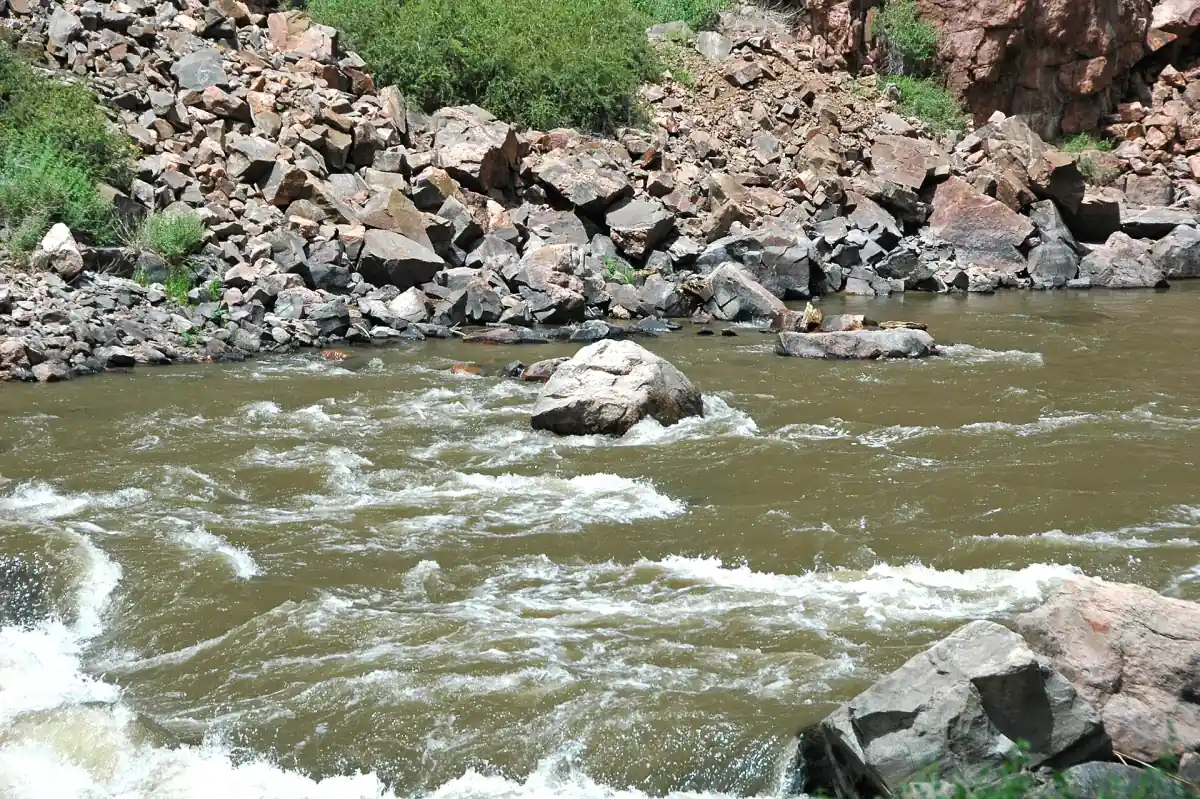
Seasonal Cottonwood rafting from Cotopaxi
A guided river outing with helmet, life vest, splash jacket and transport between the meeting point and river start, planned around water and weather conditions.
Spring runoff and summer thunderstorms
Colorado Parks and Wildlife highlights snowmelt runoff particularly in late May and early June. That river change is a different question from whether the town feels warm enough for a walk. Plan rafting with the current flow and the chosen river section in mind, and let the outfitter assess the trip's suitability for the participants.
CPW also describes summer thunderstorms as frequent in the afternoon. Keep outdoor plans flexible instead of treating a modest monthly precipitation total as a dry-weather promise. When deciding between dates for a particular activity, use the seasonal guide; when getting dressed for the day, give the forecast and current conditions priority over the long-term average.
The Cottonwood rafting outing here starts in Cotopaxi and has a duration field of three hours. It includes a guide, helmet, life vest, splash jacket and transportation between the meeting point and starting point. Hotel transport is excluded. Treat it as a seasonal river activity whose operation depends on conditions, rather than an all-weather or year-round appointment.
Frost nights and what to pack
Winter's average low temperatures are below freezing, and the March and November values also show below-freezing average nights. Pack a warm layer for mornings and evenings rather than relying on the daytime high alone. The transition months call for clothing that can be adjusted as the air warms; the table does not mark a guaranteed frost-free boundary.
For rafting, choose protection around water temperature. CPW warns that cold-water shock can affect strong swimmers too and recommends a correctly fitting life jacket, appropriate equipment and knowledge of the route and flow. Discuss the specific outing and clothing with the guide. Equipment supplied for one product should not be transferred to the description of another.
If comparing river sections, consult Royal Gorge rafting and Bighorn Sheep Canyon rafting. Royal Gorge is classified by CPW as difficult Class IV to V; Cottonwood and Bighorn are separate outings. Neither the monthly air temperature nor a sunny photograph determines which trip suits a participant.
Questions about Cañon City weather
Is this a weather forecast?
These are station climate normals for 1991 to 2020, issued by NOAA/NCEI on 23 October 2026. Use a current forecast for your travel dates and the normal values for seasonal packing.
Does low precipitation mean a dry month?
A low monthly average still permits rain or snow. Summer thunderstorms can occur in the afternoon, and a monthly total does not describe a particular day's timing.
Does warm air mean warm rafting water?
Air and water conditions need separate attention. Cold-water shock remains a concern, so choose river equipment and the specific guided outing with current water conditions in mind.